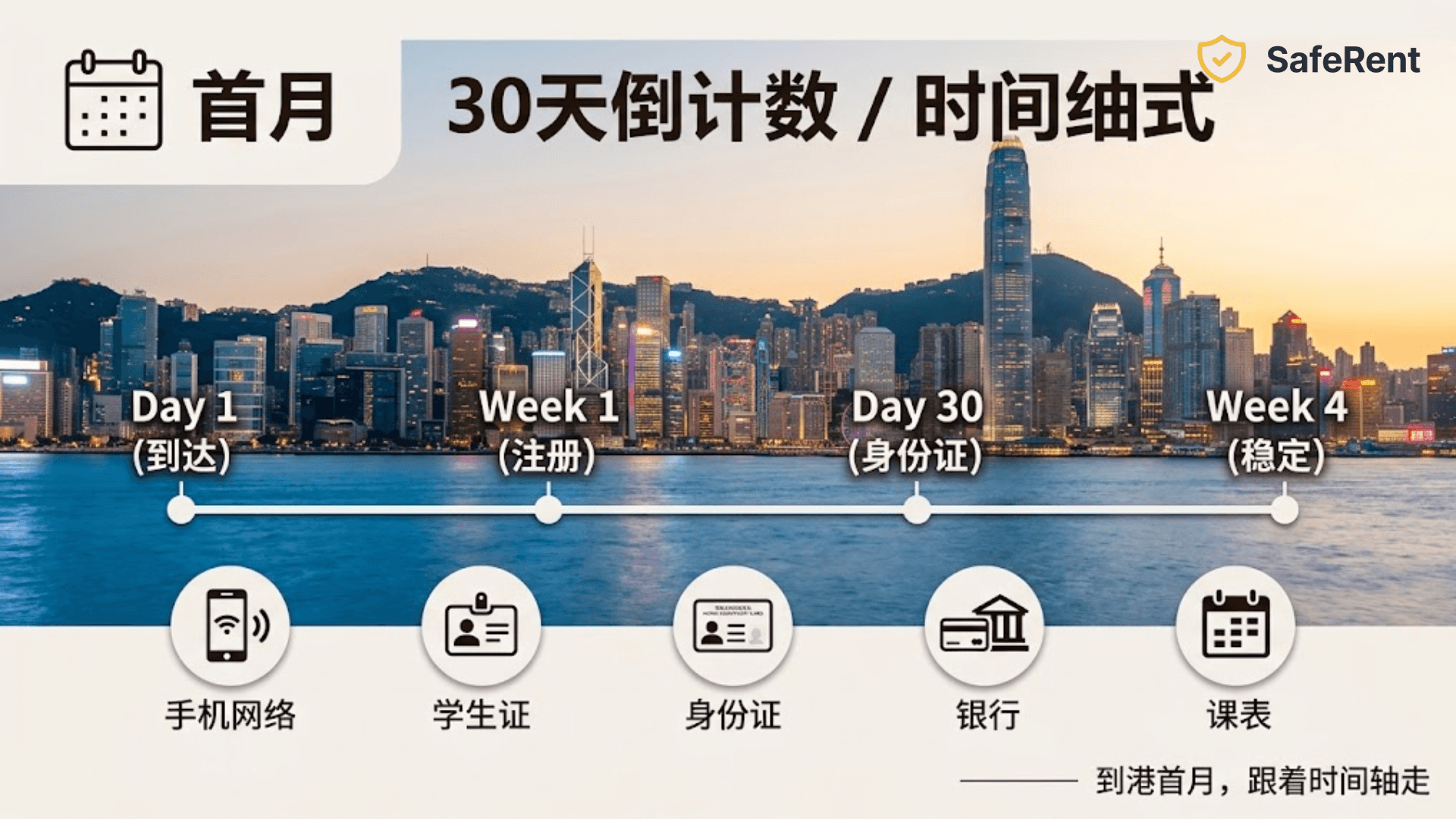
A first month studying in Hong Kong can quickly fill with registration, moving into accommodation, course selection, banking and orientation. There is a lot to do, but it does not all need to happen on day one.
A steadier order is to solve “where am I sleeping tonight, can my phone connect, and how do I reach campus tomorrow?” before completing documents and campus procedures by their deadlines. Use this checklist from the day you arrive.
Arrival day: get daily life working
The goal is not to finish every form. It is to reach your accommodation safely, contact family and be ready to go out the next morning. Keep your passport or travel document, entry permission and university papers in hand luggage.
- Save your landing record and related electronic documents, with a cloud or email backup.
- Activate a Hong Kong SIM and confirm that mobile data and SMS work.
- Get an Octopus card for the MTR, buses, convenience stores and some campus facilities.
- Photograph the room at check-in and test the lock, utilities, air conditioning and hot water.
Week one: university and accommodation procedures
The first week usually brings the most campus information. Check your university email and new-student portal first, because changes to registration, student cards, course selection and orientation are normally announced through official channels.
- Registration: confirm personal details, payment status and that enrolment is active.
- Student card: upload a photograph or collect the card as instructed, and confirm access permissions.
- Campus accounts: activate email, Wi-Fi, learning platforms and the library account.
- Move-in inspection: submit a room damage record and learn visitor, laundry, waste and repair rules.
- Orientation: prioritise sessions on course selection, academic integrity, campus safety and support for non-local students.
First 30 days: check Hong Kong identity card registration
The Immigration Department states that Hong Kong residents permitted to stay for more than 180 days generally need to register for an identity card. A new arrival aged 18 or over must register within 30 days of arrival. Arrangements may differ for people under 18 and those exempted or excluded, so check the official rules for your circumstances.
- Use the Immigration Department’s official booking service to select a Registration of Persons Office and appointment.
- Prepare the travel document, entry permission and other identity documents listed for the appointment.
- Keep the application acknowledgement and collect the card as instructed.
Week two: banking and everyday payments
Opening an account is usually easier once your address and university papers are ready. Banks may request different documents, so check official requirements or book before visiting.
- Prepare identification, entry documents, proof of student status and an accepted proof of address.
- Check monthly fees and limits for transfers, withdrawals and cross-border payments.
- Enable online banking and two-factor authentication, and never share a verification code.
- Keep another working payment method and a small cash reserve until the account is fully usable.
Weeks two to four: settle into study
Once essential life administration is under control, shift attention back to classes. Add/drop arrangements, credit rules and withdrawal consequences vary by institution, so use your university’s academic calendar and course system.
- Check for timetable clashes and whether travel between classrooms or campuses is realistic.
- Download each syllabus and record the weighting of assignments, tests, presentations and final exams.
- Confirm credits and compulsory courses before the add/drop deadline.
- Treat messages from instructors and the learning platform as authoritative, even when class groups are active.
- Learn where to find the library, printing, study spaces and student support services.
Save important and emergency contacts
Keep university, accommodation and local emergency contacts together on your phone, with a paper backup in your room. Hong Kong’s emergency number is 999; use the relevant university office for non-emergency campus matters.
- Emergency: Police, fire or ambulance in Hong Kong — 999.
- Campus matters: Student Affairs or the international office.
- Accommodation: residence tutor, front desk or overnight operator contact.
- Health support: campus clinic, a nearby clinic and counselling or wellbeing services.
- Family information: share your Hong Kong address, university, programme and at least one local contact.
First-month master checklist
- Arrival day: landing record, mobile service, Octopus, reaching your accommodation and room inspection.
- Week one: registration, student card, campus accounts, move-in procedures and orientation.
- First 30 days: check eligibility and book identity card registration where required.
- Week two: banking, payment setup, address evidence and document backups.
- Weeks two to four: complete add/drop, map assessment dates and learn campus support.
Frequently asked questions
Must everything be completed in the first week?
No. Prioritise university registration and tasks with firm deadlines. Banking and household shopping can be completed gradually once your address and documents are stable.
Will daily life be difficult before my Hong Kong identity card is ready?
Travel and university documents may work for some early tasks, but requirements vary by organisation. Book promptly where required and keep your application or appointment record.
What do new students most often miss?
Common omissions include not checking university email, missing the add/drop deadline, failing to submit a move-in damage record and not handling identity card registration within the applicable period.
Official sources
- Immigration Department: Registration or Replacement of Hong Kong Identity Card
- The Education University of Hong Kong: Life in Hong Kong
- Hong Kong Police Force: 999 Emergency Calls
Turn an unfamiliar city into everyday life
The first month does not need to be perfect. Handle deadlines first, then learn the transport, courses and neighbourhood gradually. Once your phone contains a few favourite places, a familiar route to campus and people you can ask for help, Hong Kong will no longer feel like a city you have only just reached.